Investor relations
Investor overview
Smithy is a low-cost, unstaffed network of gym and recovery pods for communities too small for a full gym. We prove it with one pilot site, then roll out site by site.
Investment highlights
- An underserved market. Gyms follow footfall, and villages and small towns are left out. Older adults, the fastest-growing group, are the least served.
- Low build cost. We design and build every unit ourselves from used containers: about £15k for a gym pod and £20k for a recovery unit.
- A profit engine. One extra recovery booking a day is worth more than ten extra gym members.
- Software-run. Booking, door codes, coaching and the member app run with no staff on site. A working prototype already exists.
- Gated roll-out. We spend nothing significant until demand and planning are proven at each step.
- Limited downside. Even the cautious case covers its running costs. If a pilot fails, the units and kit resell, so our estimated loss is £25–30k, not the full build cost.
Unit economics
One site, one month, in three cases. The village survey and the pilot tell us which one is real.
| Per site, per month | Cautious | Middle (our base) | Strong |
|---|---|---|---|
| Gym members (£35 a month) | 20 | 25 | 35 |
| Sauna + plunge bookings (~£42 each) | 1 a day | 1.5 a day | 2.5 a day |
| Revenue | £1,960 | £2,765 | £4,375 |
| − Running costs | £1,450 | £1,550 | £1,850 |
| = Profit before founders’ pay | £510 | £1,215 | £2,525 |
| − Founders’ pay (15% of revenue) | £295 | £415 | £655 |
| = Profit that repays the build | £215 | £800 | £1,870 |
| £42k build paid back in | not within 10 years | ~5 years | ~2½ years |
Break-even
A gym pod covers its ~£450 monthly costs with 13 members. A recovery unit covers its ~£1,100 with about one booking a day. Everything above that is profit.
What moves the numbers
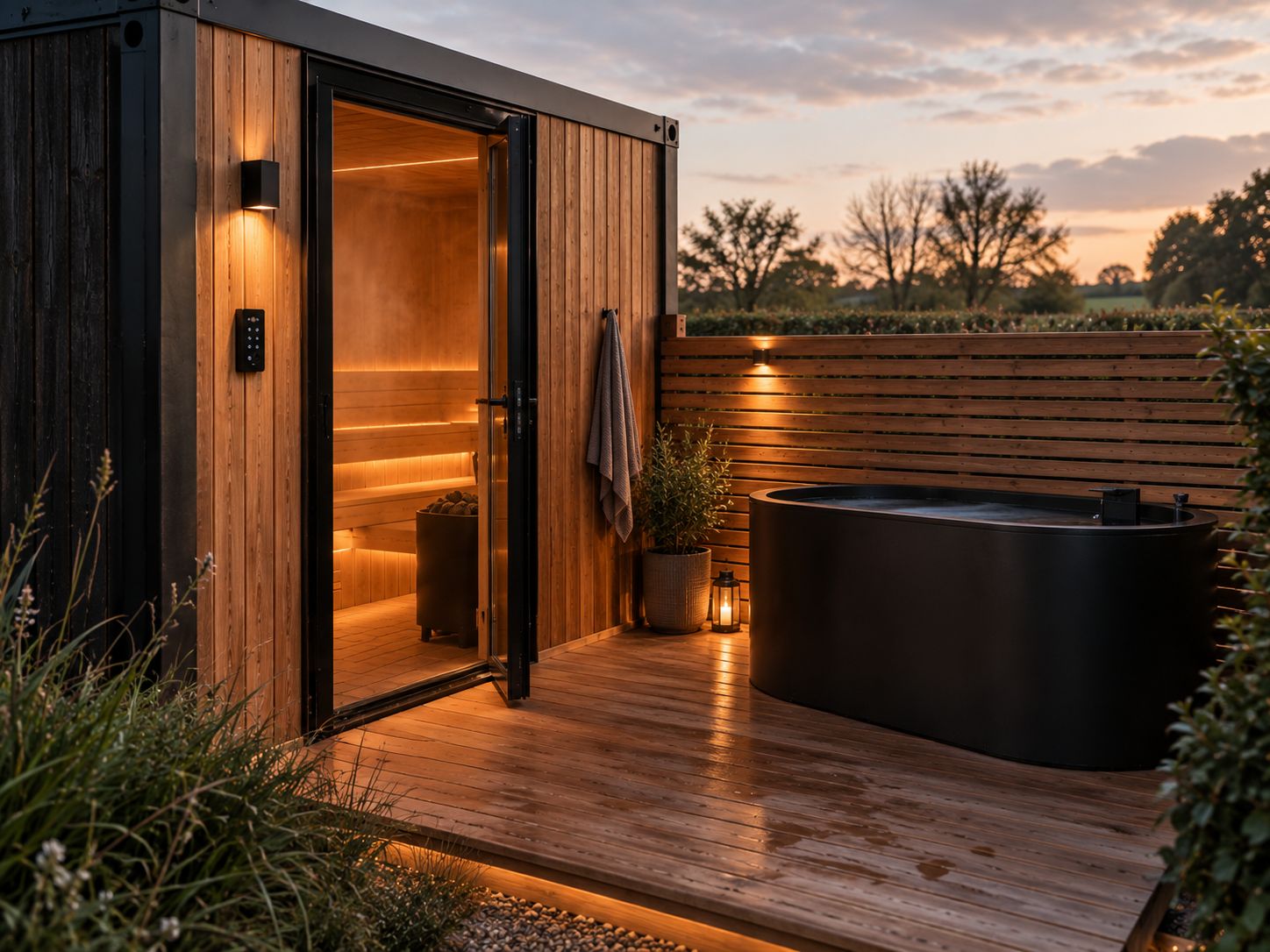
The sauna. Each extra daily booking adds about £14k a year per site, more than ten extra gym members. That’s why we test sauna demand first and open the recovery unit early.
Growth
Middle case. Each site pays for itself and then funds the next. The strong case roughly doubles every profit line.
| Pilot (1 site) | 10 sites | 20 sites | |
|---|---|---|---|
| Paid once | |||
| Build and set-up cost | ~£42k | ~£420k | ~£840k |
| Every year, once open | |||
| Revenue | ~£33k | ~£330k | ~£660k |
| − Running costs (incl. local keyholders) | ~£19k | ~£186k | ~£372k |
| − Area staff | — | — | ~£60k (2 part-time) |
| = Profit before founders’ pay | ~£15k | ~£144k | ~£228k |
| − Founders’ pay (15% of revenue) | ~£5k | ~£50k | ~£99k |
| = Profit that repays the builds | ~£10k | ~£94k | ~£129k |
| Payback and value | |||
| Build cost paid back in | ~5 years | ~5 years | ~6½ years |
| Strong case, profit before founders’ pay | ~£30k | ~£300k | ~£545k |
| Business value (3–5× profit before founders’ pay) | — | £0.4–0.7m | £0.7–1.1m (strong: £1.6–2.7m) |
Roadmap
Five phases. Each gate must be passed before we spend on the next.
- Prove demand
A community survey and waitlist, and talks with councils and landowners.
Gate: 30+ sign-ups - Permission
Company set-up, pre-application advice and a planning application.
Gate: permission granted - Build the pilot
One gym pod and one recovery unit, plus the production app and door codes.
Gate: open and safe - Run it
Six months of real members, bookings and costs.
Gate: meets the base case - Roll out
Sites 2–10 in the first area, then 20, then new areas.
Risks and how we manage them
The two risks that matter most, demand and planning, are tested cheaply before we build.
Demand
No build without 30+ sign-ups. We open one gym pod first and add more on demand, with the recovery unit opening early.
Planning
We take pre-application advice first and buy nothing until permission is granted. Units are timber-clad, screened and removable.
Safety with no staff
A health check at sign-up, CCTV, a panic button, sauna timers, slot-only door codes and specialist insurance.
Costs
An itemised budget, 10% contingency, second-hand kit and fixed-price energy contracts.
Key people
Built to run hands-off, with a local keyholder at each site and a shareholders’ agreement that covers absences.
Funding
Where we are, and what comes next.
The pilot is funded by the founders and Start Up Loans. We aren’t raising today. After the pilot, each new site needs about £45–70k, and we’d like to meet people who want to back that roll-out.
- Site-by-site funding for sites 2–10
- Equipment and asset finance partners
- Rural, health and active-ageing grant partners
The full business plan and financial model are available on request.